
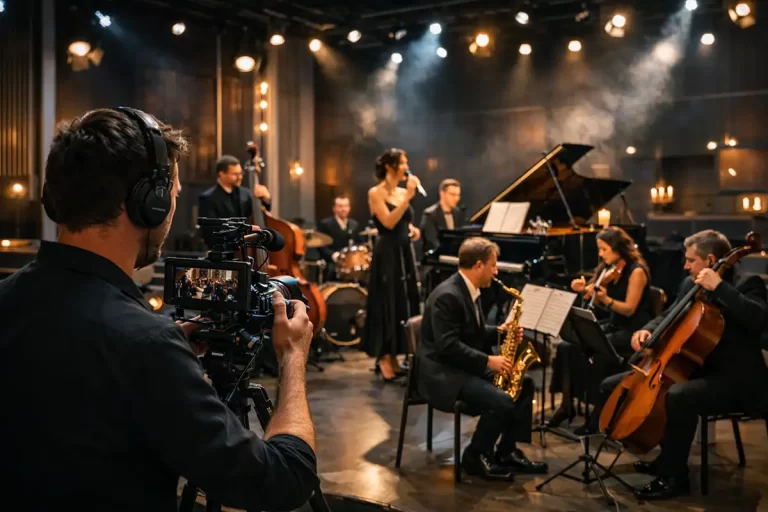
How to Choose the Right Concert Videographer?
How to choose a concert videographer starts with relevant concert experience, strong audio quality, a practical filming plan, and clear deliverables. If you are learning how to choose a concert videographer, do not focus only on price or gear. The right choice is someone who can film the performance professionally, work discreetly in the venue, and deliver usable results for archive, promotion, or applications.
Quick Answer
Choose a concert videographer based on four things: relevant concert experience, a clear audio approach, a filming plan suited to your venue and ensemble, and deliverables that match your needs. The right fit is not the provider with the biggest gear list. It is the one who can show musically sensitive work, explain the workflow clearly, and deliver usable results for archive, promotion, applications, or long-term documentation.
How to Choose a Concert Videographer: What Actually Matters
The best way to choose a concert videographer is to look at relevant concert experience, audio quality, filming approach, and deliverables before comparing prices. For concerts in Budapest and Vienna, it is also important to check whether the videographer understands venue workflow, audience conditions, and the practical needs of live performance.
Start with the result you actually need
Before comparing videographers, define what you need the finished video to do.
This sounds obvious, but it is where many projects start to drift. Some clients say they want “concert coverage,” but what they actually need is one of the following:
a full-length concert video for archive
a polished promotional video for presenters, venues, or future bookings
a short teaser or highlight reel for social media
an application video for competitions, festivals, or grants
a clean document of the performance for institutional or internal use
Those are not identical jobs. The same performance can sometimes produce several outputs, but only if that is planned properly from the start.
A full-length archive recording usually needs stable coverage, strong continuity, reliable sound, and editing decisions that serve the performance as a whole. A promotional edit may need a different rhythm, a more selective structure, and stronger emphasis on atmosphere, audience, venue, or standout musical moments.
So the first useful question is not “Who is cheapest?” but “What do I need to receive at the end?”
That one decision shapes camera count, audio setup, operator needs, edit time, and price.
Look for concert-specific experience, not generic event work
Not every event videographer is the right choice for a concert.
If you are deciding how to choose a concert videographer, start by looking at relevant concert work rather than flashy gear lists. Portfolio quality matters more than equipment claims.
Concert filming is a specialist job. Even when the technical tools overlap with other event work, the priorities are different. A provider may be excellent at corporate recaps, weddings, or branded social content and still be the wrong fit for a chamber ensemble or orchestra performance.
When you review a portfolio, ask yourself:
Does the videographer show real concert work?
Do they appear comfortable filming classical music, jazz, or acoustic performance?
Does the editing feel musically aware?
Are the performers framed clearly and respectfully?
Are cuts placed with some sensitivity to phrasing, solos, or structure?
Does the final result feel like a performance document rather than a generic event montage?
For classical music in particular, restraint is usually a strength. Overactive cutting, constant gimbal movement, and overly stylized effects often weaken the result rather than improve it. The best concert videography usually feels deliberate, calm, and attentive.
For jazz, the visual language may be slightly more flexible, but the same principle applies. The videographer still needs to understand how to follow musical interaction, solo passages, ensemble changes, and audience energy without turning the performance into visual clutter.
A relevant portfolio matters more than a polished sales pitch. If someone cannot show actual concert examples, that is a real limitation.
Check the audio before you get distracted by camera specs
Many clients focus first on camera brands, resolution, or lens lists. In concert videography, that is often the wrong priority.
Audio quality is not secondary. In many cases, it is the factor that determines whether the finished video feels professional or disappointing.
A concert film with beautiful images and weak sound is not a strong concert film. That applies to solo recitals, orchestras, chamber music, jazz performances, lectures with musical examples, and most cultural events.
Ask direct questions:
How will the sound be recorded?
Will there be a separate audio capture, or only in-camera sound?
Will you use a board feed, room microphones, or both?
How do you handle acoustic performances where the room sound matters?
Do you use backup audio sources?
Who handles syncing and balancing in post-production?
You do not always need a huge recording setup. Some venues allow for compact and elegant solutions. But you do need a clear audio strategy.
If the provider speaks at length about visuals but gives vague or shallow answers about sound, treat that as a warning sign. A concert specialist should understand that audio is central, not optional.
Ask how they would film your specific concert
A good videographer should be able to discuss your actual event, not only describe a generic package.
If you are trying to choose a concert videographer in Budapest or Vienna, ask how they would handle your specific venue and ensemble. A solo piano recital, a string quartet, and a full orchestra do not need the same filming plan. Neither does a church performance and a formal concert hall. Venue architecture, stage depth, audience layout, available light, and performer movement all affect the setup.
That includes practical questions such as:
How many cameras are appropriate for this ensemble?
Where would the cameras be placed?
Will there be camera operators, locked-off cameras, or both?
How will the setup avoid blocking the audience?
Can the team work quietly and discreetly during the performance?
Is rehearsal access needed?
What happens if the venue has restricted access or difficult sightlines?
In Budapest and Vienna especially, many cultural venues have formal working conditions, limited access windows, or acoustic and visual sensitivities that require experience and good judgment. The crew should be able to work without becoming part of the show.
This is one of the clearest differences between a generic live-event operator and a specialist concert videographer. The specialist can explain not just what equipment they own, but why the setup makes sense for your specific music and venue.
Review deliverables before comparing prices
Price comparison without scope comparison is not useful. Two quotes can look similar from a distance and be completely different in practice. One may include only basic filming and a single edit. Another may include separate audio, a full-length version, short clips, revision rounds, and better delivery formats.
If you are deciding how to choose a concert videographer, compare audio quality, camera planning, and final deliverables before comparing price. Before discussing cost, confirm exactly what will be delivered.
Check these points:
Will you receive a full-length concert edit?
Is a shorter highlight or teaser included?
Are vertical clips for social media included or optional?
How many revisions are included?
What is the expected turnaround time?
What file formats will be delivered?
Are titles or simple graphics included?
Are raw files included, excluded, or available at extra cost?
What usage rights do you have for the finished video?
This is also where related services may matter. Some musicians, ensembles, or venues need photography alongside video. That can be useful, but it should be treated clearly as a separate deliverable, not folded into the discussion vaguely. Concert photography and concert videography serve different purposes. One supports press, websites, printed materials, and documentation in still form. The other supports performance documentation, promotion, and motion-based storytelling.
Watch for red flags
Choosing the wrong videographer often becomes obvious in hindsight. It is better to spot the signals earlier.
Common red flags include:
a portfolio dominated by weddings, parties, or generic event edits with little real concert work
weak or unclear audio in sample videos
vague answers about workflow, delivery, or revision policy
overemphasis on gear and very little discussion of music, venue, or output
no useful questions asked about your ensemble, repertoire, venue, or goals
a quote that feels copied and pasted rather than built around your event
no clarity on who is responsible for audio, editing, or final delivery
None of these automatically disqualify a provider, but together they usually indicate limited fit.
A serious concert videographer does not need to sound flashy. In many cases, calm and specific communication is the better sign. Clear thinking is more valuable than marketing language.
Compare proposals properly
Once you have two or three realistic options, compare them side by side.
Look at:
number of cameras
number of operators
audio plan
setup and access requirements
editing scope
included short-form outputs
turnaround time
revision policy
travel costs
usage rights
any optional extras
This is where many people realize they were not comparing the same thing at all. A lower quote may simply exclude the items that matter most. A higher quote may reflect more complete coverage, better sound, more careful editing, or a more realistic production plan.
Travel can also matter. A Budapest-based production for a concert in Vienna, or vice versa, may involve different logistics, timing, and access assumptions. Those should be visible in the quote, not left vague until later.
The best proposal is usually not the most complicated one. It is the one that is clear, transparent, and proportionate to your event.
A simple shortlist process you can use
If you want a practical decision process, keep it simple.
1. Send a clear brief
Include the concert date, city, venue, ensemble size, approximate audience, and the type of final video you need. Mention whether you need full-length documentation, short promo clips, photography, separate audio, or anything specific for grants, applications, or presenters.
2. Ask the same key questions to each provider
This makes quotes easier to compare. Ask about relevant experience, audio workflow, camera setup, deliverables, turnaround time, and revision policy.
3. Watch at least two relevant examples carefullyof what level of coverage fits your concert?
Do not judge only from a fast showreel. Watch enough to assess framing, pacing, continuity, and sound. A short promotional montage may hide weaknesses that become obvious in longer work.
4. Compare scope before price
Make sure you know what each quote includes. A cheaper offer is not necessarily better value.
5. Choose the option that makes the production feel safer
That is often the clearest test. Live performance cannot be repeated. The right videographer reduces uncertainty. Their work is relevant, their answers are clear, and their process gives you confidence.
A useful rule for musicians, ensembles, and venues
If you remember only one thing, remember this:
Choose the videographer who understands the performance, not just the equipment.
Concert filming is part technical work, part editorial judgment, and part live-event discipline. The provider needs to understand where to be, what to prioritize, how to capture sound properly, and how to deliver something that still feels usable months or years later.
That is what makes the difference between a generic event video and a concert film that remains valuable.
Final thoughts
The right concert videographer is someone who can show relevant work, explain the production logic clearly, capture strong audio, and work in a way that respects the performance and the venue.
For musicians, orchestras, chamber ensembles, venues, and cultural organizers in Budapest and Vienna, that usually means looking beyond surface-level comparisons. Price matters, but fit matters more. A clean workflow, clear deliverables, and real concert-specific experience are usually the strongest indicators.
If you are planning a concert and want a quote based on the actual needs of the event, the next step is a clear brief, a realistic scope, and a provider who can explain exactly how the performance will be covered.
Need help planning concert videography?
If you are comparing options for a concert in Budapest or Vienna, reviewing relevant sample work and clarifying the audio and delivery plan is the best next step.
You can explore the portfolio, review the service approach, or request a quote based on your event details.
Frequently Asked Questions
Should I hire a general event videographer for a concert?
Sometimes, but it is usually safer to hire someone with actual concert experience. Concert filming depends heavily on audio quality, musical timing, discreet operation, and respect for venue etiquette.
How many cameras do I need for a concert video?
It depends on the ensemble, venue, and final use. A solo recital or small chamber concert may need a simpler setup than an orchestra or larger staged event. What matters is whether the provider can explain the logic clearly.
Do I need separate audio recording for concert videography?
In most cases, yes. Concert video is judged heavily by its sound. A proper audio plan is usually essential, especially for classical music, jazz, and acoustic performance.
What should I ask a concert videographer before booking?
Ask for relevant samples, the audio plan, camera setup, venue workflow, turnaround time, revision terms, and a clear list of deliverables.
Can one concert shoot produce both a full performance video and short promotional clips?
Usually yes, if that is planned from the start. Coverage and editing priorities should match the intended outputs.
How far in advance should I book a concert videographer?
Earlier is better, especially for formal venues, festival periods, and busy concert seasons. Early planning makes venue coordination and production decisions much easier.
Related Guides
How much does concert videography cost in Budapest?
What files and deliverables should musicians ask for after concert filming?
Can one concert recording be used for both archive and promotion?
How do I choose the right videographer for my concert?